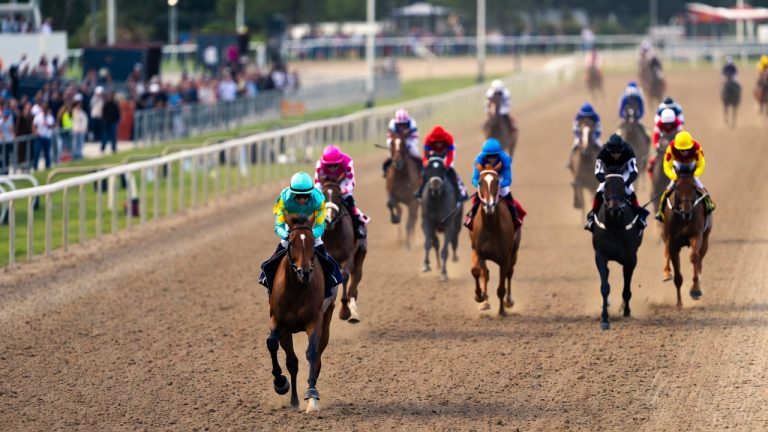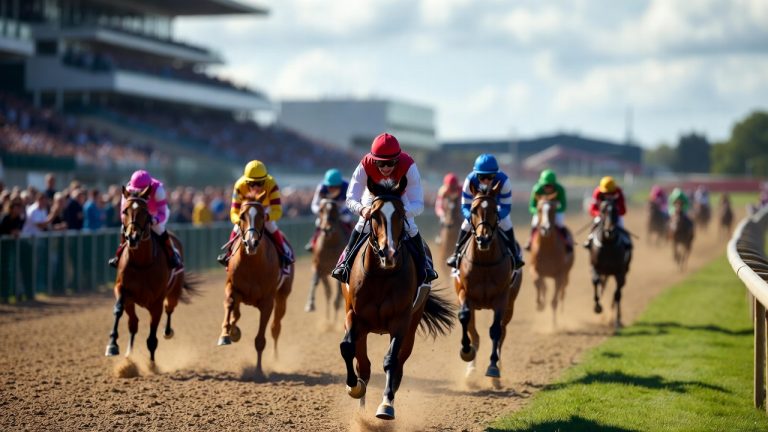

If you’re looking for Wolverhampton racing tips that go beyond a lazy list of favourites, this is the guide you need.
Wolverhampton Racecourse — known to punters simply as Wolves — is Britain’s busiest racecourse. Set within Dunstall Park, it stages up to 100 all-weather fixtures a year under floodlights. No other British track runs with the same frequency.
And that’s exactly why most punters get it wrong.
They treat Wolves like Newmarket in July. But Wolverhampton is its own ecosystem: tight turns, short straight, Tapeta surface, nuanced draw biases, and a well-documented pace profile that flips conventional wisdom on its head.
Miss those details and you’re guessing.
Understand them and Wolverhampton becomes one of the most statistically exploitable venues in UK racing.
At PaddockPicks.co.uk, we apply the same analytical depth to Wolves as we do to Royal Ascot. This guide breaks down the track, the Tapeta surface, draw data, trainer trends, pace bias and the exact step-by-step method we use to produce our daily Wolves tips today.
Wolverhampton Racecourse: Essential Facts
Wolverhampton Racecourse sits at Dunstall Park in the West Midlands, just minutes from the city centre.
It’s operated by Arena Racing Company (ARC), which also manages Lingfield, Doncaster and several other major UK venues.
Quick Reference Table
| Factor | Detail |
|---|---|
| Established | Racing since 1825 |
| Current Site | Dunstall Park (opened 1888) |
| Surface | Tapeta (installed August 2014) |
| Track Type | Left-handed, tight oval |
| Straight Length | ~2 furlongs (short) |
| Annual Fixtures | 80–100 (Britain’s busiest) |
| Race Code | Flat All-Weather only |
| Floodlights | First UK floodlit course (1994) |
| Key Feature | Strong hold-up bias over 1m+ |
Two moments defined modern Wolverhampton:
1994: Britain’s first floodlit racecourse
2014: First UK track to install Tapeta
Since then, the Tapeta era has produced a deep, analysable dataset — perfect for bettors who work systematically.
The Tapeta Surface: Why It Changes Everything
Understanding Tapeta is non-negotiable when building accurate Wolverhampton horse racing predictions.
Tapeta is a synthetic blend of wax-coated sand, fibre and rubber. It differs from Polytrack (used at Kempton, Chelmsford and Lingfield) and from Fibresand (formerly used at Southwell).
Tapeta:
Produces minimal kickback
Remains consistent across temperature shifts
Rides more stamina-demanding than Polytrack
Rewards balance and efficient cornering
Newcastle also uses Tapeta, making Newcastle form more transferable than Kempton or Chelmsford form.
What Horses Thrive at Wolves?
From 10+ years of Tapeta data:
1. Hold-up horses with a turn of foot
Front-running over 1 mile is statistically difficult at Dunstall Park.
2. Compact, balanced types
The tight bends punish long-striding gallopers.
3. US-influenced bloodlines
Sires with dirt/synthetic performance (e.g., War Front or Into Mischief lines) often produce runners suited to Tapeta racing tips.
4. Newcastle Tapeta form
More reliable crossover than Polytrack form.
Wolverhampton Draw Bias: Data You Must Respect
Draw bias at Wolves is nuanced — it varies sharply by trip.
Wolverhampton Draw Bias by Distance
| Distance | Favoured | Avoid | Notes |
|---|---|---|---|
| 5f (10+) | Low (1–4) | High (9+) | First bend quickly |
| 6f | Low-mid | High | Low-to-middle edge |
| 7f | Mild low | Neutral | Less critical |
| 1m | Neutral | Neutral | Pace dominates |
| 1m½f | Avoid Stall 2 | — | Worst combo statistically |
| 1m4f | Stall 7 strong | High weak | Best historical LSP |
| 1m6f | Neutral | Neutral | Stamina key |
Two combinations deserve permanent attention:
Stall 7 over 1m4f – historically profitable
Stall 2 over 1m½f – statistically damaging
Before analysing form, apply the draw filter. It takes 30 seconds and saves long-term losses.
Pace Bias at Wolverhampton: The Hidden Edge
The pace bias at Wolves is one of the most overlooked edges in British racing.
Unlike Lingfield (where controlled front-runners can dominate), Wolverhampton’s:
Tight bends
Short straight
Tapeta resistance
…combine to make sustained front-running over 1m+ extremely difficult.
What Wins at 1m and Beyond?
Midfield runners
Horses described as “ran on strongly”
Closers off an honest pace
When multiple front-runners line up, pace collapse becomes likely — and hold-up types sweep late.
When assessing Wolverhampton all-weather form guide data, always identify the likely pace map before committing.
Step-by-Step: How to Build Winning Wolverhampton Racing Tips
Here’s the exact PaddockPicks methodology.
Step 1: Apply the Draw Filter
5f (10+ runners): downgrade high draws
1m½f: red flag stall 2
1m4f: check stall 7
Step 2: Check Tapeta Course Form
Post-August 2014 Wolverhampton form only.
Pre-Tapeta form = irrelevant to current surface.
Step 3: Map the Pace Scenario
Count confirmed front-runners.
2–3 leaders → likely collapse → favour closers
No obvious pace → tactical race → versatile runners
Step 4: Trainer Profitability (Not Just Wins)
Using data from Racing Post and Timeform:
M Appleby — historically strong LSP
A W Carroll — high volume, lower profitability
Always measure Level Stakes Profit (LSP), not just strike rate.
Step 5: Jockey Intelligence
Regular Wolves riders understand:
When to press on bends
Where to launch a challenge
How Tapeta rides under floodlights
Surface-specific knowledge matters more here than at many turf venues.
Step 6: Market Movement
Monitor early exchange moves via Betfair.
Significant shortening in low-grade evening races often signals stable intent.
Key Races at Wolverhampton
Lady Wulfruna Stakes
The feature event at Wolves is the Lady Wulfruna Stakes — a Listed 7f36y contest staged each March.
Often serves as a stepping stone toward All-Weather Championship targets.
Lincoln Trial Handicap
An early-season pointer toward Doncaster’s Lincoln Handicap.
All-Weather Championship Qualifiers
Throughout winter, Wolverhampton stages qualifiers for the All-Weather Championships Finals Day at Lingfield.
Tracking consistent qualifiers gives a free edge for Finals Day betting.
Internal Link Suggestions (PaddockPicks)
/daily-tips//all-weather-tips//trainer-stats//tapeta-form-guide//wolverhampton-tips/
10-Point Wolverhampton Betting Checklist
| # | Question |
|---|---|
| 1 | Checked draw bias for trip? |
| 2 | Proven Tapeta course form? |
| 3 | Trainer LSP positive at Wolves? |
| 4 | Jockey experienced here? |
| 5 | Pace map favourable? |
| 6 | Class drop in play? |
| 7 | Sire suited to Tapeta? |
| 8 | Market move aligned? |
| 9 | Recent run within 30 days? |
| 10 | Reviewed PaddockPicks tips? |
Frequently Asked Questions
What surface does Wolverhampton use?
Tapeta (installed 2014).
Is there a strong draw bias?
Yes — especially 5f (low draws) and 1m½f (avoid stall 2).
Are front-runners effective?
Only at shorter trips. Over 1m+, hold-up horses outperform.
Can Kempton form transfer?
Polytrack form transfers cautiously. Newcastle Tapeta form is more reliable.
Responsible Gambling
If gambling becomes a problem, visit BeGambleAware or call 0808 8020 133. 18+ only.
Final Summary: Why Wolverhampton Is Beatable
Wolverhampton isn’t chaotic.
It’s data-driven.
The track rewards:
Intelligent draw analysis
Tapeta-specific form
Pace scenario mapping
Trainer profitability tracking
Most punters focus on recent winners.
Serious bettors focus on structural edge.
At PaddockPicks.co.uk, our daily Wolverhampton racing tips apply this framework race-by-race — transparent reasoning, full draw breakdowns, and nightly publication for early prices.
🏇 Visit paddockpicks.co.uk for tonight’s expert Wolves tips and start betting with a system — not a guess.